National Multifamily REIT
Florida, FL
Multifamily operators rarely notice how uneven their visual assets are until they audit an entire portfolio side by side. One property has bright, wide-angle interiors shot on a full-frame camera. Another has dim, phone-quality photos taken by a leasing agent in a hurry. A third has a professional shoot from three years ago that no longer reflects the renovated clubhouse or the new pool furniture. Individually, each property's photos might look "fine." Together, they tell prospective renters and institutional stakeholders that the portfolio is managed inconsistently, and renters make that inference in seconds.
Visual inconsistency has a direct cost on leasing velocity. Renters comparing units across a submarket, or across sister properties in the same portfolio, use photo quality as a proxy for property quality and management competence. A listing with flat, poorly lit, or oddly cropped images gets fewer clicks on ILS platforms, lower time-on-listing engagement, and ultimately more leasing agent hours spent overcoming an impression the photos should have already sold. At the portfolio level, inconsistency also undermines brand equity. When an owner or management company is trying to build a recognizable identity across dozens or hundreds of assets, whether for investor marketing, refinancing packages, or acquisition due diligence, mismatched visual quality signals a lack of operational discipline that extends the doubt to leasing, maintenance, and reporting standards as well.
The fix is not "hire a better photographer for the next shoot." It is building a documented shoot standard that every property, every vendor, and every internal marketing team follows the same way, regardless of which market the asset sits in or who is holding the camera.
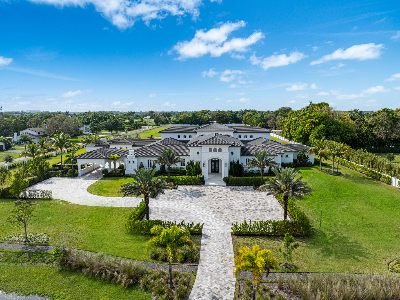
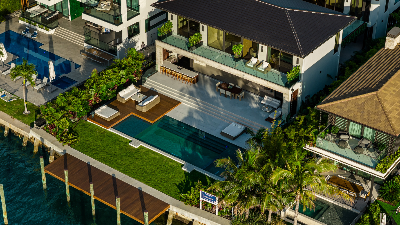
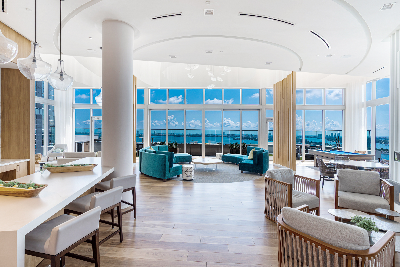
A workable standard starts with a shot list built around unit types rather than buildings. Every distinct floor plan should have a defined minimum: primary living space from two angles, kitchen, primary bedroom, primary bathroom, and any differentiating feature such as a balcony, den, or in-unit washer/dryer. Amenity coverage should be equally codified: leasing office and model unit, pool and sundeck, fitness center, coworking or clubhouse space, dog park or pet spa, parking structure or garage entry, and signage at the street. Exterior and aerial coverage should include a full building elevation, a dusk or twilight exterior, and drone footage that establishes proximity to highways, transit, and neighborhood context, since that context is often what differentiates one submarket asset from another in a renter's mind.
The standard should also specify when to shoot a model unit versus an occupied unit, since these serve different purposes and should never be treated interchangeably. Model units are shot to sell the floor plan itself: fully staged, styled, and shot wide to communicate scale. Occupied unit photography, used more selectively, should follow a stricter checklist to avoid tenant belongings, personal items, and clutter appearing in marketing material. Finally, every shoot should deliver both horizontal and vertical crops, since horizontal images anchor property websites and ILS listings, while verticals are increasingly required for paid social campaigns, Instagram and Facebook placements, and mobile-first ad units.
Consistency at scale is a technical discipline as much as a creative one. Camera height should be standardized, typically at chest height for interiors to approximate a natural eye-level view rather than an exaggerated wide-angle distortion shot from waist height. Lens choice matters just as much: a fixed range, generally in the 16mm to 24mm equivalent for interiors, keeps room proportions believable across every property, while telephoto compression should be reserved for exterior and skyline shots. Shooting wider than that range to make small units look artificially larger erodes trust the moment a renter walks the unit in person.
White balance should be locked to a consistent daylight-neutral setting across all shoots, with corrections made in post rather than left to whatever ambient light a unit happens to have that day. Color grading should follow a single LUT or preset family across the portfolio, so that the warmth of the wood tones, the saturation of the pool water, and the brightness of the sky look the same whether the shoot happened in Miami or in a sister market. This is what actually creates "brand," visually. Renters may never articulate it, but a consistent color and light signature is what makes a portfolio feel like one company rather than a loose collection of independently managed buildings.
Photography scheduling should be built into the turn calendar, not bolted onto it. The ideal capture window is after a unit has been fully turned, cleaned, and staged, but before it is occupied, since this is the only point at which the unit will look as good as it ever will. Portfolio-wide, this means coordinating with the operations team on turn schedules months in advance rather than requesting a rush shoot the week a unit needs to be listed. For occupied-unit photography of larger floor plans that rarely turn, scheduling should be built around tenant notice periods and should always include a written release process.
None of this discipline matters if the right files do not make it to the right destination. A portfolio-wide naming convention, typically property code, unit type or amenity tag, angle, and orientation, should be enforced at delivery so that any team member, vendor, or automated feed can identify an asset without opening it. Metadata should include the property name, unit type, and capture date embedded in the file, which matters both for internal asset management and for feeding structured data to ILS platforms like Apartments.com, Zillow Rentals, and CoStar, each of which has its own image specifications and ordering logic. Delivery folders should mirror this structure: a master archive organized by property and shoot date, a curated subset formatted and compressed for web and ILS syndication, and a separate vertical-crop set staged for paid campaigns. Centralizing this in a shared asset management system, rather than leaving it scattered across individual property manager drives, is what allows a portfolio to actually operate as a portfolio.
Photography ages faster than most operators expect. A reasonable refresh cadence is a full reshoot every 18 to 24 months, with interim refreshes triggered by renovation, amenity addition, or seasonal exterior changes worth capturing. Archiving matters as much as refreshing: retired assets should be moved out of active syndication folders immediately, since outdated photos left live on an ILS feed create the exact mismatch between marketing and reality that drives complaints and early move-outs.
Standardization only holds if someone owns it. A single marketing or brand leader should have final approval on every shoot before it is published, checking it against the shot list and grading standard rather than relying on the photographer's judgment alone. New sites entering the portfolio, whether through acquisition or lease-up, should be onboarded with a documented brief that includes the shot list, technical specs, and delivery structure before the first shoot is scheduled. Vendors, including outside photography studios, should be held to a written specification sheet as part of the contract, with sample deliverables reviewed against it before full engagement, and renewal contingent on consistent compliance rather than convenience.
Photostetic works with multifamily owners and operators to build and enforce exactly this kind of portfolio-wide visual standard. Learn more on our [multifamily solutions page](/solutions/multifamily-real-estate-operators), or, for organizations managing this across multiple markets and vendor relationships, see our [enterprise page](/enterprise).
See the work behind the insights.