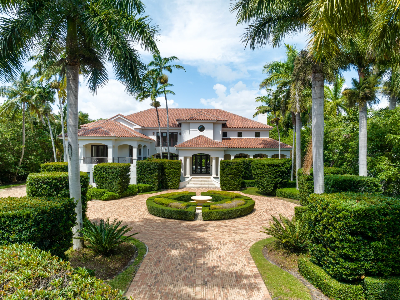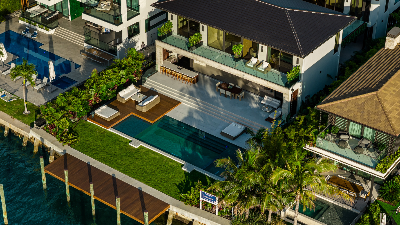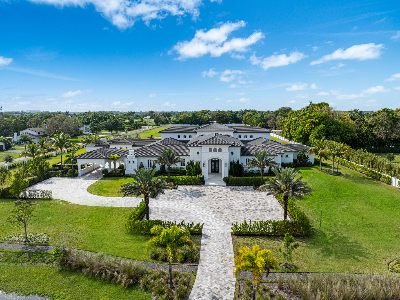
A 10 Acres - $25M Trophy Estate
Davie, Fort Lauderdale, FL
Procurement teams buying real estate media at portfolio scale face a different problem than an individual agent hiring a photographer for a single listing. The buyer is not choosing a photo style, they are choosing an operating partner who will touch dozens or hundreds of assets a year, across multiple markets, with consistent quality and defensible licensing. Getting this wrong is expensive in ways that do not show up until months later: missed leasing deadlines, unusable files, licensing disputes with a syndication partner, or a drone incident that becomes a liability event. This guide lays out a structured way to define scope, compare vendor types, and run an evaluation process that holds up to internal audit.
Before contacting any vendor, write down what you are actually buying. Multifamily, retail, office, industrial, hospitality and land each require different deliverables and different skill sets. A leasing photo package for a garden-style apartment community is not the same job as an aerial site plan for a 40-acre industrial park or a branded video package for a hotel renovation. Ambiguity here is the single biggest cause of scope creep and change orders later.
Only once this is documented should you build a shortlist. A vendor that is excellent at single-family listing photography is not automatically qualified for a multi-building lease-up with drone flythrough and virtual tour requirements.
These are three fundamentally different business models and each has a place, but portfolio buyers usually need the third.
A solo shooter is one person with a camera, sometimes a drone license, working market by market. Pricing is competitive and the relationship can be personal, but capacity is capped at one calendar and one set of skills. Illness, travel, or a double-booking becomes your problem.
A franchise network licenses a brand name to independent operators in each city. This can solve multi-market coverage on paper, but quality and equipment vary by franchisee, and the corporate brand has limited authority to enforce consistency shoot to shoot. Contracts are often signed at the local level, which complicates a master agreement.
A production studio employs or contracts a bench of shooters and editors under one operating standard, with shared equipment protocols, a single point of contract, and internal quality control before delivery. For a portfolio buyer, this model is generally the only one that scales without the buyer's own team becoming the de facto quality control layer.
Ask direct questions about depth, not just about the market you need covered this quarter.
A vendor that cannot answer these with specifics is telling you, indirectly, that your account will be handled reactively rather than planned.
This is the section most buyers under-negotiate and later regret. Ask the vendor to state, in writing, what license is being granted with delivery.
A perpetual, non-exclusive commercial license means the buyer can use the images indefinitely, without renewal, and the vendor retains the right to license similar or the same work to others (subject to any confidentiality terms). This is the standard institutional-grade license because it removes the risk of images disappearing from a listing package after a term expires.
Confirm explicitly: who may use the files (the ownership entity only, or also its property manager, leasing broker, lender, and syndication partners like ILS sites or portals), whether resale or sublicensing to a third party is permitted, whether the vendor can use the images in its own portfolio or marketing, and what photo credit, if any, is required. For a portfolio with third-party managers or joint venture partners, get the usage rights extended in writing to those named parties, not left implied.
General liability insurance naming the client and property owner as additional insured should be a baseline requirement, not a negotiable extra. For drone work, confirm the pilot holds a current FAA Part 107 remote pilot certificate and that the vendor carries drone-specific liability coverage. Ask how the vendor handles restricted airspace near airports, HOA or municipal drone restrictions, and site safety protocols around active construction, tenants, or leasing traffic. Request certificates of insurance as a standing document on file, not something chased down per shoot.
Ask how long raw and edited files are retained after delivery, whether the vendor maintains a cloud archive or only local storage, and what the recovery process looks like if a file is lost or a property needs a re-order of an older asset without a re-shoot. For a growing portfolio, a vendor with a searchable, tagged archive by property and date saves real operating time over one that requires a manual search through old project folders.
Define standard turnaround in business days and rush turnaround pricing before you sign, not after the first urgent request. Ask what quality control review happens before delivery: is there an internal editor sign-off step, or does raw work go straight from shooter to client. Establish a clear revision policy: how many rounds are included, what counts as a vendor error versus a new request, and how quickly revisions are turned around relative to the original delivery window.
Real estate media is typically priced through a few recognizable structures, and portfolio buyers should understand which one actually fits their volume.
An MSA with a rate card is usually the right structure once a portfolio crosses a handful of properties a year, because it removes the need to re-negotiate terms for every new asset and gives finance a predictable framework.
Before committing to a full portfolio contract, commission one or two paid pilot shoots on representative assets, ideally one straightforward property and one more complex one (multi-building, drone-heavy, or tight access). Evaluate the pilot against the same criteria as the RFP: turnaround time actually met, communication during scheduling, on-site professionalism, quality of raw versus edited output, and how the vendor handles a revision request. A paid pilot, rather than a free sample, tests the real working relationship rather than a vendor's best-effort showcase piece.
Score finalist vendors on a simple weighted matrix: coverage and capacity, licensing terms, insurance and compliance, turnaround reliability, quality of pilot deliverables, pricing structure, and responsiveness during the RFP process itself, since that responsiveness tends to predict account service quality.
Watch for red flags: reluctance to put licensing terms in writing, no proof of Part 107 certification or insurance, inability to name a backup shooter, vague answers about archive retention, or pricing that is unusually low relative to the rest of the field, which often signals subcontracted labor with no quality control layer.
Once a vendor is selected, document brand standards as a contract exhibit, not a verbal understanding: shot list templates by asset type, color and editing style guide, file naming and delivery conventions, and required disclaimers or credit lines. Attaching this as a schedule to the MSA means the standard travels with every future work order and every shooter the vendor assigns, rather than depending on institutional memory.
Selecting a real estate media vendor at portfolio scale is a procurement decision as much as a creative one. Treat it that way: define scope precisely, understand the operating model behind the pitch, get licensing and compliance in writing, and prove the relationship with a paid pilot before signing a long-term agreement. To discuss a portfolio-level engagement or request a formal proposal, visit [/enterprise](/enterprise) or reach our team directly at [/contact](/contact).