
Does Professional Photography Increase Sale Price in Miami?
Yes, but not because the photos themselves magically add value. Professional photography increases sale price by changing who sees your listing, how quickly they act, and what mental anchors they bring to the negotiating table. After more than a decade shooting luxury properties across Miami Beach, Brickell, Pinecrest, and Coral Gables, I've watched this play out hundreds of times.
The gap between what sellers think professional photography does and what it actually does is worth understanding, especially in Miami's crowded luxury market where five comparable oceanfront condos might hit the market in the same week.
The First Five Seconds
Redfin analyzed over 100,000 listings and found that homes with professional photography sold for anywhere between $934 and $116,076 more than comparable properties with amateur photos. That range tells you something important. This isn't a flat premium. The effect compounds based on price point, location, and competition.
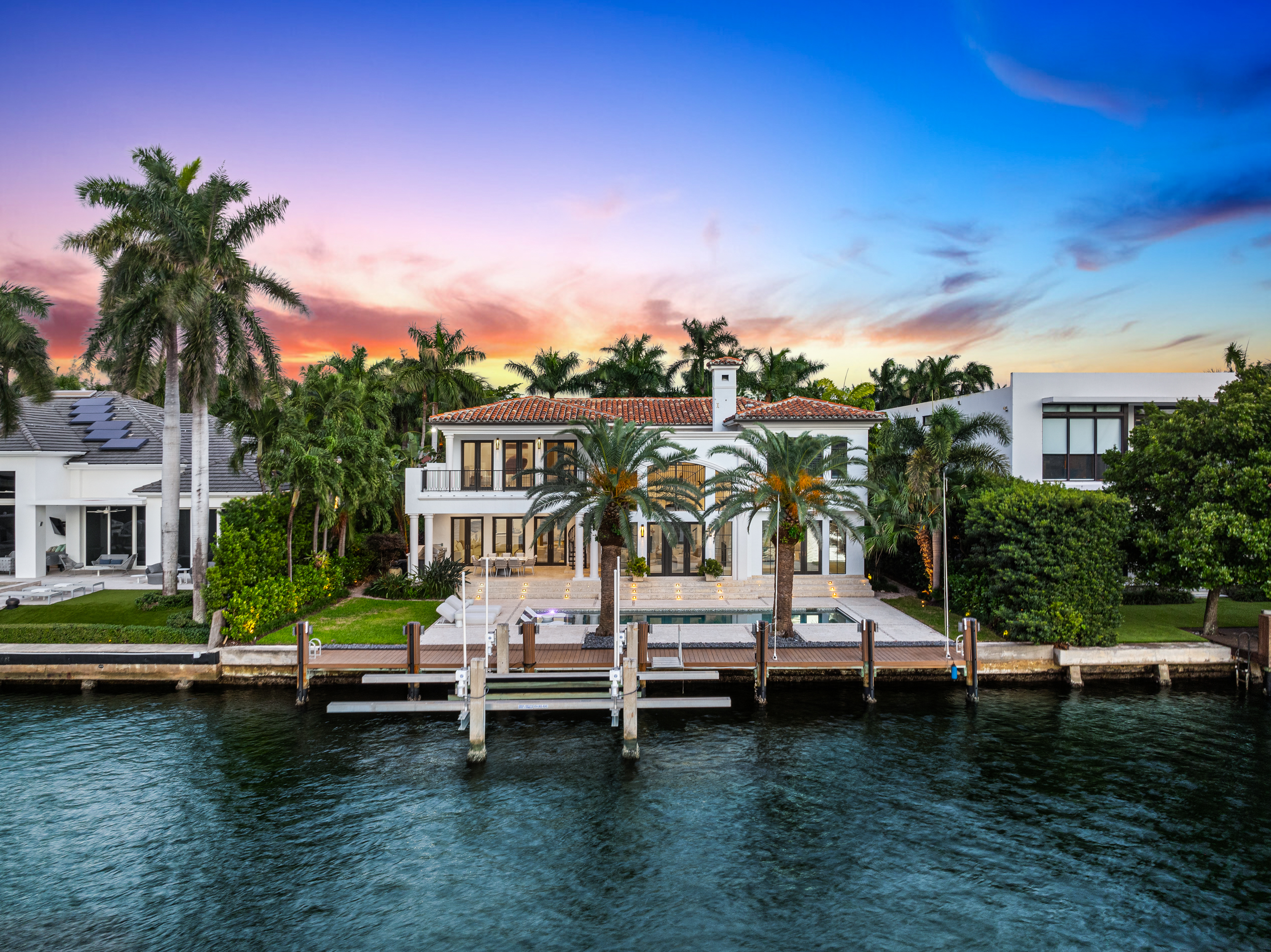
In Miami's waterfront market, the spread is even more pronounced. When I shoot a $3 million Sunset Islands property, I'm not just documenting rooms. I'm solving a specific problem: how do you show a backyard that faces downtown Miami at twilight when the iPhone camera can't balance the interior lights with the skyline without turning one or the other into a blown-out mess?
Buyers scrolling through listings at night aren't being generous with their attention. According to the National Association of Realtors, 89% of buyers say photos are the most useful feature when searching for homes online. They're making yes-or-no decisions in seconds, and the thumbnail image that appears in search results is doing most of that work.
I've shot units in the same Brickell high-rise, same floor, same layout, listed within weeks of each other. The one with professional photos that properly exposed the Biscayne Bay view got 14 showings in the first ten days. The one with dark interiors and white-hot windows got four. When the second seller finally hired us to reshoot, the listing went from stale to under contract in less than two weeks.
Waterfront Properties and the View Premium
Miami's luxury market revolves around water. Buyers pay six figures just for the difference between a bay view and an ocean view. But I've seen $4.5 million homes on Indian Creek photographed so poorly that you couldn't tell what the property was looking at.
The issue isn't that the photographer didn't try. It's that they didn't understand exposure bracketing. When you shoot through floor-to-ceiling windows during the day without HDR technique, you get one of two results: either the room is properly lit and the windows are pure white, or the view is visible and the interior looks like a cave. Neither one communicates what the buyer is actually paying for.
IMOTO, a major real estate photography company, found that listings with HDR photos sold 50% faster and received 118% more online views. In Miami waterfront properties, that difference feels even sharper. Buyers shopping for homes with water access are specifically filtering for view quality. If your photos don't show it, they're not scheduling a showing to find out.
We shoot most waterfront properties either early morning when the light is coming across the water, or at twilight when we can balance interior lighting with the exterior environment. A twilight shot of a Venetian Islands pool deck with the Miami skyline lit up in the background doesn't just look better—it sells a lifestyle that justifies the price per square foot.
High-Rise Condos and the Differentiation Problem
Brickell and Miami Beach condos operate under different rules than single-family homes. You're often selling nearly identical floor plans in the same building, sometimes with the same staging company's furniture. Professional photography matters more here because there's almost nothing else to differentiate your unit from the one listed two floors down.
What we're really photographing is the specific view angle, the time of day, and how the light interacts with that particular unit's orientation. A southeast-facing unit at 8 AM looks completely different than a southwest-facing unit at 6 PM, even if they share the same square footage and finishes.
Buyers at this level know this. They're comparing view premiums down to the degree of rotation. A National Association of Realtors survey found that 72.2% of realtors believe professional photography is essential in marketing themselves to sellers, but in the luxury condo market, it's non-negotiable. These buyers are often working remotely from New York or Sao Paulo, building their entire shortlist from online photos before they ever visit Miami.
If your listing photos look like the seller took them during a quick walkthrough, you're not making anyone's shortlist. The cognitive shortcut is too easy: poor photos equal unmotivated seller, potential issues with the property, or an agent who isn't serious.
Drone Photography and Miami Beach Restrictions
Drone photography changed how we market luxury properties, but Miami Beach's regulations make it more complex than most sellers realize. You can't just fly a drone anywhere—there are restrictions around South Beach due to airport proximity, and the city has specific requirements about where and when you can operate.
Despite the hassle, it's worth it. Research shows homes with drone or aerial photography sell 68% faster. For properties with rooftop terraces, waterfront access, or significant land, an aerial perspective communicates scale and context that ground-level photos can't match.
I shot a Pinecrest estate last year: five acres with a tennis court, pool, and guest house. The ground-level photos were fine, but the drone footage showing how the property sat on a private street with mature oak canopy changed how buyers perceived it. It went from "nice house" to "private compound" in their mental framing. That shift is worth real money at the negotiating table.
When Professional Photography Isn't Enough
There's a ceiling to what photography can accomplish, and pretending otherwise does everyone a disservice. If your property is overpriced for the neighborhood, has obvious deferred maintenance, or is fighting against unfavorable market conditions, professional photos will increase showing volume but won't close the sale.
I've shot beautiful homes in transitional neighborhoods where sellers were testing the high end of market value. The photos performed well—lots of saves, lots of clicks—but showings didn't convert to offers. The problem wasn't the visual presentation; it was that the property was $200,000 over where the market was trading.
Professional photography also can't fix fundamental staging issues. If the house is cluttered, if the furniture is blocking architectural features, or if the color palette is aggressively personal, no amount of camera skill solves that. A National Association of Realtors report emphasized that buyers want to see clean, organized, well-maintained properties—the photos just need to communicate that accurately.
There's also a risk of overproduction. I've seen listings where the photography is so stylized and heavily edited that it creates a credibility gap when buyers show up in person. The photos looked like a magazine shoot, but the house looked like a house. That disappointment costs you negotiating leverage.
The Speed Factor
Redfin's research found that professionally photographed homes in the $400,000-plus range sold roughly three weeks faster than similar homes with amateur photos. In Miami's luxury market, time on market directly affects perceived value.
A property that sits for 60 days starts to feel stale. Buyers wonder what's wrong with it. Their agents start suggesting lowball offers to "test the seller's motivation." Every week that passes without an offer changes the psychology of the negotiation.
Professional photography compresses that timeline by frontloading interest. Instead of a slow trickle of showings over two months, you get concentrated activity in the first two weeks. That creates urgency, which creates competition, which protects your price.
I've watched this pattern repeat across price points. The listing that gets eight showings in week one has a completely different negotiating dynamic than the listing that gets eight showings spread over eight weeks, even if they end up with the same total number of interested parties.
The MLS Thumbnail Reality
Here's something most sellers never think about: the first image in your MLS listing becomes the thumbnail in every search result. That tiny compressed image—maybe 200 pixels wide on someone's phone—is working harder than any other single asset in your marketing.
A poorly composed thumbnail with bad lighting or awkward framing gets scrolled past. A clean, well-lit hero shot with clear architectural lines or an obvious view makes people stop. In a market where buyers are looking at 40 listings in one sitting, that fraction-of-a-second decision determines whether your property gets a second look.
I've seen identical units in the same building perform radically differently based solely on which image led the listing. One emphasized the ocean view with proper color correction showing the actual turquoise color of Miami's water. The other had a blown-out window and dull interior lighting. Same building, same floor, same finishes. One got seven showings in five days. The other got two in three weeks.
The difference wasn't the property. It was the thumbnail.
Pricing Psychology and Perceived Value
Professional photography doesn't just make your home look better—it changes the mental framework buyers use to evaluate it. Research indicates that homes with professionally edited photos receive 47% higher asking prices per square foot. That's not because the photos added square footage. It's because high-quality imagery creates an association with quality, care, and justifiable pricing.
When buyers see crisp, properly lit photos with accurate color and good composition, they subconsciously assume the seller is serious, the property is well-maintained, and the price is probably fair. When they see dark, poorly framed iPhone photos, they assume the opposite—even if the house itself is in perfect condition.
This matters during negotiations. A buyer who showed up expecting a well-maintained property based on professional photos is less likely to nickel-and-dime over minor inspection items. A buyer who showed up despite mediocre photos is already primed to find problems that justify a lower offer.
What Actually Moves the Number
Professional photography increases sale price not through direct causation but through several compounding effects: more qualified buyers see the listing, they see it faster, they arrive with better expectations, and the property spends less time on market before generating offers.
In Miami's luxury segment, where I've photographed everything from Star Island estates to Brickell penthouses, these effects are amplified. At $3 million-plus, buyers expect professional presentation as baseline. Amateur photography doesn't just hurt your listing. It signals that something is wrong with the seller's approach or the property itself.
The Redfin data showing professional photos correlated with homes selling for up to $116,000 more reflects this reality. It's not that the photography added six figures of value. It's that professional photography positioned the property to attract the right buyers at the right time with the right expectations, which protected the price through the negotiation process.
After a decade shooting Miami real estate, the pattern is consistent: properties with professional photography sell faster, generate more competitive interest, and close at stronger prices relative to their initial list. The question isn't whether it increases sale price—it's whether you're willing to accept the cost of not using it in a market this competitive.
Sources Referenced
- National Association of Realtors (NAR) – Home buyer preferences and realtor survey data
- Redfin – Analysis of professional photography impact on sale prices and time on market
- Realtor.com – Research on virtual tours and online viewing behavior